Resources
Everything you might need. In one page.
PODCAST - Episode 9: Decoding P-glycoprotein Interactions: Inhibitors, Inducers, and Clinical Relevance
Global DDI Solutions
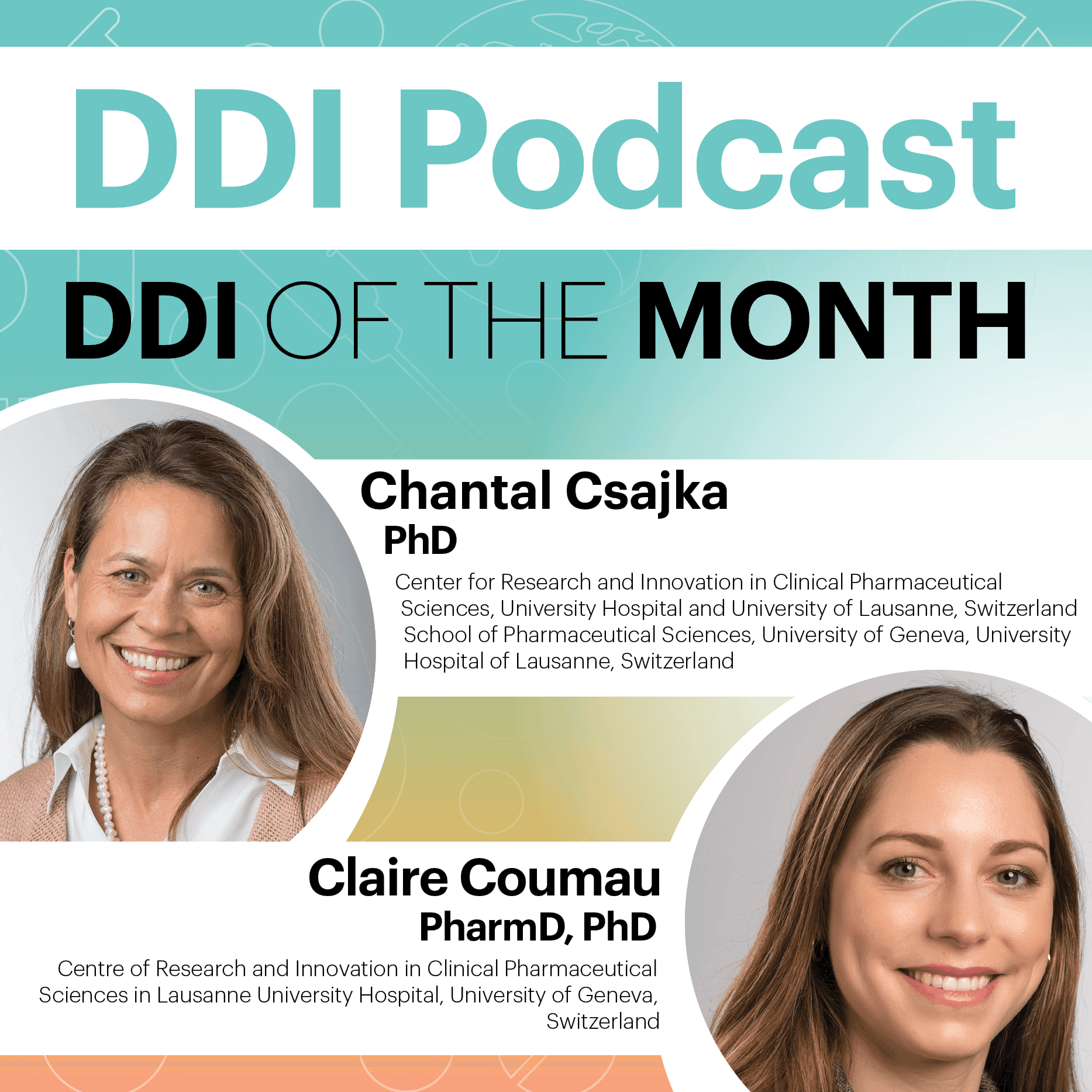
In this ninth edition of DDI of the Month, host Prof. Dr. David Burger welcomes two leading experts from Switzerland, Dr. Claire Coumau and Dr. Chantal Csajka, for an in-depth discussion on P-glycoprotein (P-gp)–mediated drug–drug interactions.
The episode is centered around their recent publication in Clinical Pharmacokinetics: “A Systematic Review and Classification of the Effects of P-glycoprotein Inhibitors and Inducers in Humans, Using Digoxin, Fexofenadine, and Dabigatran as Probe Drugs.”
P-glycoprotein plays a key role in drug absorption and disposition, yet its interaction potential has long been less clearly defined than that of hepatic enzymes such as CYP3A. In this conversation, the authors explain why they set out to systematically review human data, propose a clinically meaningful classification of P-gp inhibitors and inducers, and highlight important similarities — and differences — between P-gp and CYP3A interactions.
Tune in to hear about:
- Why a human-only systematic review of P-gp interactions was needed
- How P-gp inhibitors and inducers can be classified using exposure-based criteria
- Which drugs qualify as moderate or potent P-gp inhibitors or inducers
- Why strong P-gp modulators are relatively rare compared to CYP3A modulators
- The concept of short-term inhibition followed by time-dependent induction
- The role of probe drugs such as digoxin, dabigatran, fexofenadine — and the potential of edoxaban
An insightful episode for clinicians, pharmacists, and researchers involved in managing and studying drug–drug interactions. Don’t miss it — listen now!
Available on: Website | Spotify | Apple Podcasts