Resources
Everything you might need. In one page.
The Lung Cancer DDI Manager is expanded with two new drugs
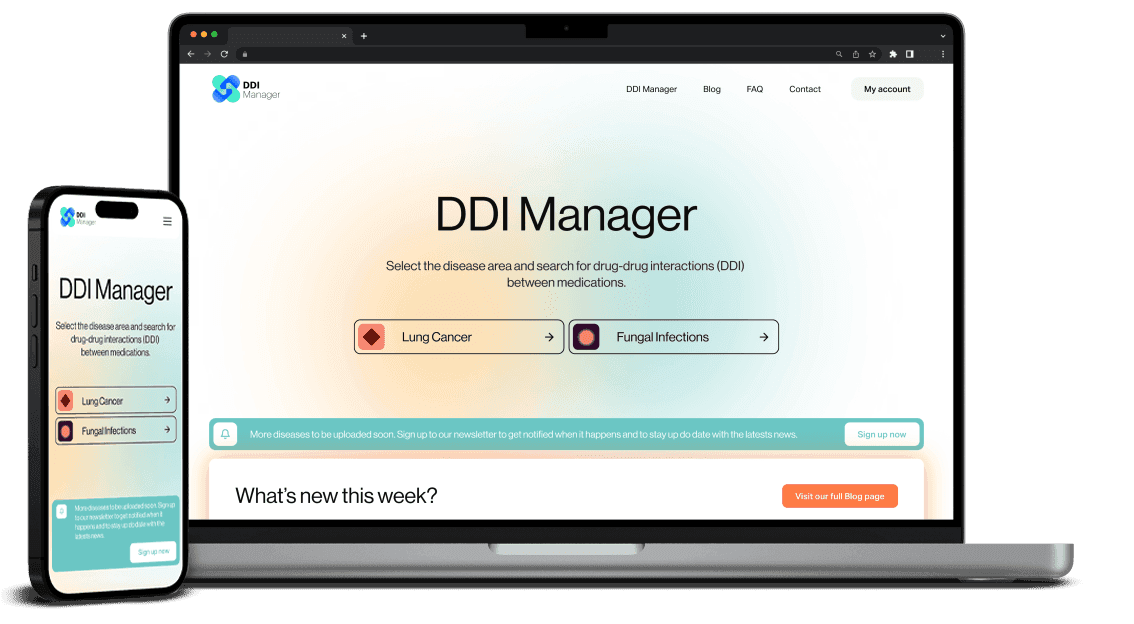
The Lung Cancer DDI Manager is expanded with new drugs: encorafenib and binimetinib!
Encorafenib (a BRAF inhibitor) and binimetinib (a MEK inhibitor) are approved targeted therapies used in combination for patients with unresectable or metastatic melanoma with BRAF V600 mutantation, including their role in the treatment landscape of advanced non-small cell lung cancer (NSCLC). Their addition to the Lung Cancer DDI Manager supports clinicians in identifying clinically relevant drug-drug interactions (DDIs) for these therapies.
Encorafenib is primarily metabolized by CYP3A4 enzymes and is also subject to metabolism via CYP2C19 and CYP2D6 to a lesser extent. In addition, encorafenib may influence the metabolism of other drugs through enzyme inhibition or induction, making it a potential perpetrator of DDIs.
Piscitelli et al. (2026) performed a cocktail study with several substrates, including midazolam (a CYP3A4 substrate). Encorafenib decreased midazolam AUC and Cmax with 82% and 74%, respectively, demonstrating that encorafenib is a strong CYP3A4 inducer.
Binimetinib is predominantly metabolized through glucuronidation pathways (mainly UGT1A1) with limited involvement of CYP enzymes (CYP1A2 and CYP2C9). Although its CYP-related interaction potential is lower compared to encorafenib, caution is still warranted when co-administered with drugs affecting UGT pathways or transport proteins (OAT3).
Make sure to explore the Lung Cancer DDI Manager for a complete overview of clinically relevant DDIs with encorafenib and binimetinib!